Setting the Stage for the Ultimate Assistant Showdown
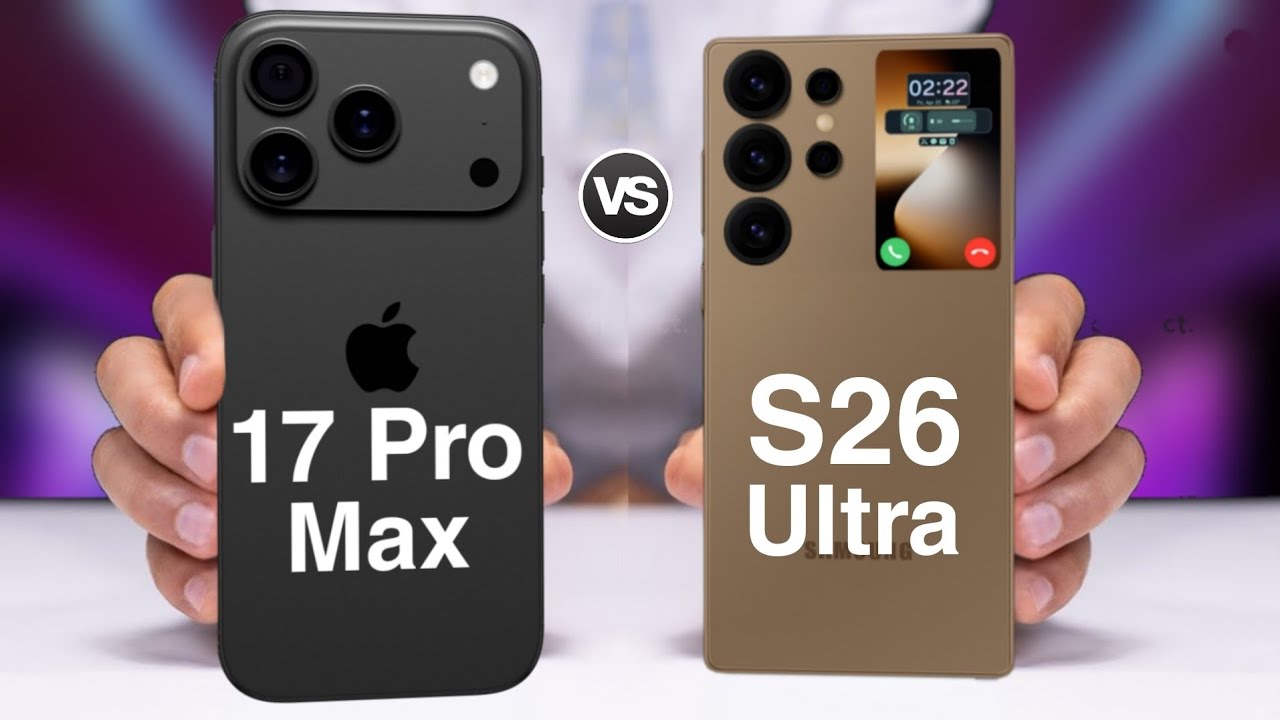
In the ever-evolving world of smartphones, the battle between tech giants Apple and Samsung continues to captivate millions of users worldwide. With the release of their latest flagships, the iPhone 17 vs Samsung S26 debate has emerged at the forefront: which smartphone assistant truly thinks better? As artificial intelligence (AI) becomes more sophisticated, these virtual assistants—Apple’s Siri and Samsung’s Bixby—play increasingly critical roles in daily interactions, from managing schedules to controlling smart homes. The iPhone 17 vs Samsung S26 debate is not just about hardware or design; it’s about the brain behind the phone, the AI assistant that claims to simplify our lives. This article dives deep into the evolution, intelligence, features, and privacy aspects of these assistants, providing a comprehensive and human-friendly guide to help users decide which digital companion is superior in 2025 and beyond.
Both Siri and Bixby have improved a lot since they first appeared. But the key question is: which one understands context better, is faster, more reliable, and actually useful? To find out, we must look at how they’ve advanced, how they work in daily use, and what special features they offer. Privacy is also very important today, so we will explore how each company protects user data. This article breaks down these points with comparisons, user feedback, and expert views to help settle the debate clearly.
Evolution of AI Assistants in Smartphones: Siri vs Bixby
Apple’s Siri and Samsung’s Bixby have been rivals for nearly a decade. Siri launched in 2011 as one of the first AI assistants on smartphones. It introduced a conversational way to interact with devices, from setting reminders to answering questions. Apple has continuously improved Siri, making it smarter and better integrated with iPhones, iPads, Macs, and HomePods. What started as a simple voice command tool now offers personalized suggestions and proactive alerts.
Samsung entered the scene later, unveiling Bixby in 2017 with the Galaxy S8. Unlike Siri’s broad focus, Bixby was designed with a specific emphasis on deep device control, allowing users to command apps and settings with natural language. Samsung’s vision was to make Bixby the ultimate “phone operator” capable of handling complex, multi-step tasks within the device. Over the years, Bixby has expanded its capabilities to control smart home devices, integrate with Samsung’s ecosystem, and even translate languages in real-time. Despite early criticism regarding its limited functionality and slower adoption, Bixby’s AI engine has undergone significant upgrades powered by advances in machine learning and deep neural networks.
Today, both assistants represent the forefront of AI in smartphones, but their evolution underscores different philosophies: Apple focuses on simplicity, user privacy, and ecosystem harmony, while Samsung pushes for deeper customization and device control. Understanding these foundational differences helps frame the ongoing iPhone 17 vs Samsung S26 debate, as users weigh not just raw intelligence but also how each assistant fits their lifestyle and preferences. Learn More
Performance and Intelligence Comparison: Real-World User Experience
When it comes to real-world performance, the question “Which assistant thinks better?” can be dissected across several dimensions: response accuracy, contextual understanding, multitasking ability, and speed. In recent benchmark tests, the iPhone 17’s Siri showed impressive improvements in understanding complex, multi-layered queries. For example, users reported that Siri could handle follow-up questions in conversations without losing context, a crucial step toward more human-like interactions. Additionally, Siri’s voice recognition has become more natural and adaptive, learning from users’ speech patterns to reduce errors over time.
On the other hand, Samsung S26’s Bixby shines in device-specific commands. It can adjust settings, launch apps with detailed instruction. And handle tasks like “Open Spotify, play my workout playlist, and turn on Do Not Disturb.” In speed tests, Bixby was faster at these device controls. This shows Samsung’s strength in optimizing AI for hardware. However, Bixby struggles with open-ended or vague questions. In these cases, Siri’s broader knowledge base performs better.
A detailed table below highlights these performance aspects:
| Feature | Siri (iPhone 17) | Bixby (Samsung S26) |
| Response Accuracy | High, with advanced NLP | Moderate, excels in commands |
| Contextual Understanding | Excellent in follow-ups | Limited, often requires precise input |
| Multitasking Ability | Good, supports chained queries | Excellent, especially device tasks |
| Speed | Fast in general queries | Very fast in device control |
| Integration with Apps | Wide third-party support | Deep Samsung app integration |
User reviews and case studies reflect these strengths and weaknesses. For instance, a tech blogger noted, “Siri feels more conversational and less robotic, but Bixby makes it incredibly easy to control my phone without tapping.” This duality means the better assistant depends heavily on user expectations and usage patterns, reinforcing that the iPhone 17 vs Samsung S26 debate is as much about personal preference as it is about technology.
Unique Features and Integration: What Sets Them Apart?
Beyond raw intelligence, the appeal of AI assistants lies in their unique features and ecosystem integration, which can significantly enhance user convenience. Siri’s standout feature in the iPhone 17 is its deep integration with iOS and Apple’s ecosystem. For example, Siri can send messages, initiate FaceTime calls, and control HomeKit-compatible smart devices with fluidity unmatched by many competitors. Moreover, Siri’s proactive suggestions—like reminding you to leave for an appointment based on traffic or suggesting shortcuts based on your routine—add a predictive dimension to user interaction.
Samsung’s Bixby, meanwhile, offers a distinct Vision mode that leverages the phone’s camera for real-time text translation, object identification, and shopping suggestions. This feature integrates AI not just through voice but visually, broadening the assistant’s usability. Additionally, Bixby Routines automate complex sequences of actions based on context, like switching to silent mode during meetings or adjusting brightness at sunset, showcasing Samsung’s commitment to smart automation. Another highlight is Bixby’s ability to control a wide range of Samsung appliances and smart devices, positioning it as a hub for connected living.
These differences show that while Siri excels in ecosystem harmony and simplicity, Bixby pushes boundaries in customization and smart automation. The choice in the iPhone 17 vs Samsung S26 debate often hinges on whether users prioritize seamless integration or greater control over their devices and environments.
Privacy and Data Handling: Who Respects Your Data More?
In 2025, privacy concerns about AI assistants have grown. Data handling is now a key issue in the iPhone 17 vs Samsung S26 debate. Apple strongly values user privacy. Siri processes more data on the device itself, not in the cloud. This reduces risks of breaches and unauthorized access. Apple also offers tools for users to control what data Siri can use. This makes privacy a central part of the experience.
Samsung has made strides in improving Bixby’s privacy protocols, including encrypted data transmissions and user consent for data collection. However, Samsung’s broader ecosystem, which often involves third-party partnerships and a more cloud-reliant model, has sparked debate among privacy advocates. Some users express concerns over how much data is shared across apps and devices, especially given Samsung’s extensive IoT network.
A recent case study by a cybersecurity firm concluded, “Apple’s Siri currently leads in minimizing data exposure risks through localized AI processing, while Samsung is still catching up with comprehensive privacy safeguards.” For privacy-conscious consumers, this dimension could be a decisive factor when choosing between the iPhone 17 and Samsung S26.
Fazit (Conclusion)
The iPhone 17 vs Samsung S26 debate about which assistant thinks better is far from straightforward. Both Siri and Bixby have evolved into powerful AI companions, each with unique strengths. Siri impresses with natural language understanding, smooth ecosystem integration, and superior privacy measures. Bixby, meanwhile, stands out in device control, smart automation, and visual AI capabilities. Ultimately, the better assistant depends on individual user needs—whether you value conversational ease and privacy or deep customization and automation. As AI assistants continue to improve, this competition drives innovation, benefiting all smartphone users by making daily interactions smarter and more intuitive.
FAQs
Q1: Can Siri and Bixby be used interchangeably on iPhone 17 and Samsung S26?
No, Siri is exclusive to Apple devices, and Bixby is built into Samsung smartphones.
Q2: Which assistant handles multitasking better?
Bixby excels in device-specific multitasking, while Siri is better at conversational multitasking.
Q3: Are Siri or Bixby better at understanding accents and languages?
Siri supports more languages with higher accuracy, but Bixby is improving rapidly, especially in Korean and Asian languages.
Q4: How do Siri and Bixby compare in privacy?
Siri processes more data locally and offers stronger privacy protections compared to Bixby’s cloud reliance.